
In This Article
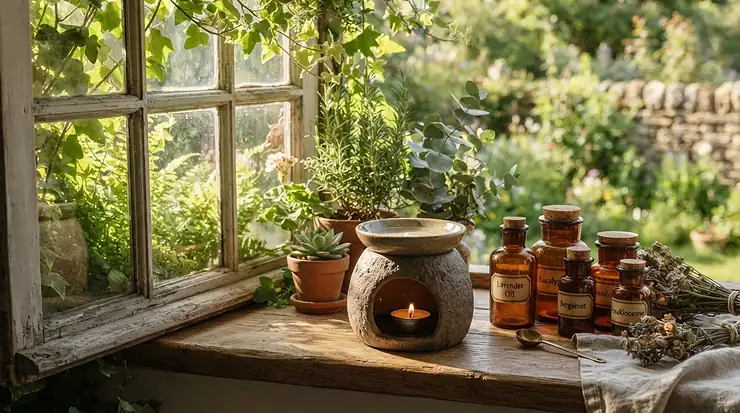
A soapstone oil burner is a two-part aromatherapy burner carved from talc-rich natural stone. A tea light burns in the hollow base and gently warms a small bowl above it. The bowl holds water with a few drops of essential oil, fragrance oil or a wax melt. No plug, no battery, no app asking for your email.
Think of it as the slow cooker of home fragrance. Electric diffusers sprint, while stone takes its time and then keeps going. That patient, even warmth is the whole appeal, and it’s why the soapstone oil burner has outlasted plenty of gadgets on British shelves. Carved soapstone has real pedigree too. The Horniman Museum in London catalogues a Kisii soapstone carving with commentary describing the Kisii stone industry as a hand-mined, hand-carved trade in western Kenya.
Fair warning, though. The market is crowded with near-identical carvings, and a pretty photo says nothing about wall thickness, bowl depth or how a burner behaves after three weeks of nightly use. So this guide compares seven real burners on specs, aggregated review themes and practical fit. It also covers natural stone oil burners as a category, the limits of heat retention properties, the craft of natural stone carving, and which durable burner materials earn their keep.
Quick Comparison: 7 Soapstone Oil Burner Picks at a Glance
| Product | Size & Weight | Approx. Price Range | Review Snapshot | Best For |
|---|---|---|---|---|
| Pure Source India Handcrafted Soapstone Aroma Burner | ~7.5 × 7.5 × 9–10 cm, ~550 g | Around £10–£15 | ~4.1/5 from roughly 1,400 ratings | First-time buyers (tea light included) |
| KC Kullicraft Soapstone Elephant Carving Oil Burner | ~7.5 × 7.5 × 9.5 cm, 450 g | Around £10–£15 | Mixed build-quality reports | Decorative shelves |
| Nirvana Class NIRMAN Handmade Stone Aroma Burner (Leaf) | ~7.6 × 7.6 × 10.2 cm, ~320 g | Under £12 | ~4.1/5 from roughly 880 ratings | Desks and small rooms |
| Indus Lifespace Essential Oil Diffuser and Oil Warmer | ~7.6 × 7.6 × 10.2 cm, ~460–510 g | £12–£18 range | Mostly positive in reviews found | Easy cleaning, wax melts |
| Indus Lifespace Handmade Soapstone Tealight Burner (Teal) | ~7.6 × 7.6 × 10.2 cm, ~500 g | £12–£18 range | ~3.7/5 from roughly 1,500 ratings | Wax-melt fans |
| Artist Haat 3″ Oil Burner | ~3 in (7.6 cm) | Under £12 | Praised for generous bowl | Bathrooms, bedsides |
| Pure Source India Stoneware Aroma Diffuser | 3 × 3 × 3 in, ~280 g | £12–£18 range | Too few verified reviews | Gifting (two tea lights) |
Looking at the comparison above, the Pure Source India Handcrafted Soapstone Aroma Burner is the safest first purchase thanks to its large review pool and included tea light. The Nirvana Class NIRMAN Handmade Stone Aroma Burner (Leaf) suits tiny spaces because its bowl is small by design. Wax-melt fans should look at the Indus Lifespace Handmade Soapstone Tealight Burner (Teal), though it has the lowest average rating here, so inspect it on arrival. Treat every star rating as a snapshot, not a verdict.
💬 Just one click — help others make better buying decisions too!😊
Top 7 Soapstone Oil Burner Picks: Expert Analysis
1. Pure Source India Handcrafted Soapstone Aroma Burner — the most-reviewed all-rounder
A pool of roughly 1,400 ratings gives you something sturdier to reason from than a handful of glowing five-star reviews. It stands around 9–10 cm tall on a footprint of about 7.5 cm and weighs roughly 550 g, which is hefty for something this small. That weight works in its favour, because a dense, low base is harder to nudge off a bedside table than a feather-light ceramic equivalent. The lattice carving lets flame glow through, and the listing cites coverage of around 8 m², a realistic claim for a box room or small bedroom rather than an open-plan lounge.
On paper this is the sensible first burner: nothing exotic, nothing fiddly, one tea light included. Reviewers rate it around 4.1 out of 5 overall. They praise the carving and say it warms quickly. Complaints include a cracked unit that was swiftly replaced and one report of oil seeping from the upper cup onto the candle below.
Pros:
- ✅ Tea light included for instant use
- ✅ Weighty base resists accidental nudges
- ✅ Large review base to sanity-check
Cons:
- ❌ Reported oil leakage if the bowl is overfilled
- ❌ Colour can differ from the listing photo
Expect roughly £10–£15 at the time of research (check current price). For a well-reviewed all-rounder, that is strong value.
2. KC Kullicraft Soapstone Elephant Carving Oil Burner — elephant carving with real shelf presence
If the burner will live in plain sight, character matters, and the elephant motif delivers it. The listing gives a footprint of about 7.5 cm, a height of roughly 9.5 cm and a weight of 450 g. That makes it noticeably lighter than the Pure Source India Handcrafted Soapstone Aroma Burner, so it’s easier to move but a touch less planted. The listed runtime of around three hours lines up with a standard tea light.
My read is that this suits buyers who put looks first and are happy to inspect the piece on arrival. Reviewer sentiment is genuinely split. One buyer switched from a ceramic burner that made wax smoke and found the soapstone version cleaner. Another reported cracks on the wax tray and wax leaking towards the candle, and was unimpressed for the money. That spread usually points to variable batch quality, not one flawed design.
Pros:
- ✅ Distinctive carved elephant design
- ✅ Compact, lighter 450 g build
- ✅ One reviewer found less wax smoking than ceramic
Cons:
- ❌ Inconsistent quality reports, including cracks
- ❌ Small bowl needs frequent topping up
Roughly £10–£15 is the likely range (check current price). Good value if yours arrives intact; keep the packaging until you’ve tested it.
3. Nirvana Class NIRMAN Handmade Stone Aroma Burner (Leaf) — compact desk-friendly footprint
This is a deliberately small burner: about 10 cm tall with a 3-inch bowl, a capacity of 40 ml and a weight near 320 g. Forty millilitres is only about eight teaspoons, so it warms quickly but also dries out quickly. The listing’s 40-square-foot floor area (under 4 m²) tells you the designer had a desk, bathroom or bedside table in mind, not a lounge.
Honestly, that modesty is its strength for small spaces and its weakness for anything bigger. Ratings sit around 4.1 out of 5 from roughly 880 reviewers, who call it solid and sturdy and say it works well as a decorative burner. One reviewer noted the listing carried a frequently-returned flag but kept theirs, calling it heavy and well made. They also said a metal cup mentioned in other reviews wasn’t in their box, which hints at batch differences.
Pros:
- ✅ Small footprint suits desks and shelves
- ✅ Latticed screen shows candlelight nicely
- ✅ Solid feel for the size
Cons:
- ❌ Tiny 40 ml bowl dries quickly
- ❌ Reported variation between batches
Budget territory, under £12 at the time of research (check current price). It’s a good-value personal burner and a poor choice for big rooms.
4. Indus Lifespace Essential Oil Diffuser and Oil Warmer — removable stone bowl for easy cleaning
The standout here is practical: the bowl lifts out. That sounds trivial until you’ve tried scraping set wax from a fixed dish. The listing gives about 7.6 × 7.6 × 10.2 cm and roughly 460–510 g (listings differ). It quotes a runtime of around two hours, which is conservative next to a typical tea light.
What the spec sheet won’t tell you is the trade-off. A stone bowl takes time to warm, and reviewers say so: one noted the wax took a few minutes to melt because the bowl needs to heat through. That’s the mass working as designed, and it’s the flip side of the gentle heat people love. The same reviewer said it arrived well packed with no damage and preferred it to plug-in fragrances. At least one other buyer was disappointed, though the detail wasn’t clear.
Pros:
- ✅ Removable bowl makes scent changes simple
- ✅ Works with wax or oils, per reviewers
- ✅ Reported to arrive well packed
Cons:
- ❌ Slow to melt wax at first
- ❌ Listed runtime of about two hours is short
Likely £12–£18 (check current price). Fair value if easy cleaning is your priority.
5. Indus Lifespace Handmade Soapstone Tealight Burner (Teal) — metal-lined bowl heats faster
Here the design answers the slow-warming problem directly. The listing describes a removable, metal-lined bowl in a carved stone body of around 500 g, with the same compact 7.6 cm footprint as its sibling. It also quotes a 200 ml capacity, which looks generous for a 3-inch bowl, so I’d treat that figure cautiously.
Reviewers report that a single small tea light melted wax without trouble and that the lining heats quickly. One said it takes a full-size wax melt. The ratings are lower, around 3.7 out of 5 from roughly 1,500 reviewers. Complaints include a hairline crack that absorbed wax, a product that didn’t match the photo, and a note that soapstone is porous, so oils should be diluted in water first.
Pros:
- ✅ Metal lining speeds up wax melting
- ✅ Fits a full-size wax melt
- ✅ Substantial, weighty feel
Cons:
- ❌ Lowest average rating of the seven
- ❌ Reports of cracks and mismatched appearance
Around £12–£18 (check current price). Worth it for wax-melt fans willing to inspect on arrival.
6. Artist Haat 3″ Oil Burner — generous bowl for its size
Most small burners skimp on the bowl; this one reportedly doesn’t. Reviewers describe the top dish as a good, generous size compared with most oil burners, which matters because a bigger water reservoir buys you more safe burn time before topping up. It’s a hand-carved 3-inch soapstone piece.
I couldn’t verify a full spec sheet or star rating, so read the current listing before buying. What the review themes suggest is a pretty, well-made little burner. Buyers use it in bathrooms, pair it with other stone accessories and talk about buying a second one. That’s a useful sign, because repeat purchases are harder to fake than adjectives. The caveat is that the sample is small.
Pros:
- ✅ Larger bowl than typical at this size, per reviewers
- ✅ Looks right beside other stone bathroom pieces
- ✅ Reviewers mention buying again
Cons:
- ❌ Limited verifiable spec data
- ❌ Small review sample found
Budget range, under £12 (check current price). Promising value, with the evidence honestly thin.
7. Pure Source India Stoneware Aroma Diffuser — two tea lights in the box
The sweetener is two tea lights included, which makes it an easy gift. It’s a hand-carved soapstone burner of about 3 × 3 × 3 inches weighing roughly 280 g, the lightest on this list. Lighter stone has less thermal mass, so it should warm a touch faster but hold heat less steadily. It is also easier to knock over, so it needs a firm, level spot.
I couldn’t verify detailed review text for this one, so I won’t pretend otherwise. If you want the proven track record, the Pure Source India Handcrafted Soapstone Aroma Burner is the better-evidenced sibling. This model makes most sense as a small gift where the extra tea light is a nice touch.
Pros:
- ✅ Two tea lights included
- ✅ Light and easy to move once cool
- ✅ Compact shelf footprint
Cons:
- ❌ Lower weight is less stable
- ❌ Few verifiable reviews
Around £12–£18 (check current price). Reasonable for gifting, less proven for daily use.
✨ Ready to Pick Your Soapstone Favourite?
🔍 Take your home fragrance to the next level with these carefully selected burners. Click on any highlighted product name to check current pricing and availability. They’ll help you create a calm, welcoming atmosphere your whole household will love!
How to Use Soapstone Tea Light Burners: Setup, First Use and Care
Soapstone tea light burners are forgiving, but a few habits separate a pleasant evening from a scorched bowl.
- Choose a safe spot. Use a flat, stable, heat-resistant surface away from curtains and paper. Fire Scotland’s candle safety advice also recommends a holder designed for tea lights and warns that cracked burners should never be used.
- Water first, oil second. Fill the bowl with water, then add a few drops of oil. Pouring neat oil onto the stone invites staining, as reviewers note.
- Light the tea light. Use a standard unscented one. Tea lights burn for around four hours, while night lights burn longer and run much hotter, so keep night lights out of aromatherapy burners.
- Be patient. Stone warms slowly, so allow several minutes before judging the scent.
- Top up, don’t gamble. Check the water level during use, and never let the oil burn right down.
- Cool, then clean. Let everything cool completely, wipe the bowl with a soft cloth and avoid soaking the stone.
The most common first-month mistake is treating the bowl like a kettle. It isn’t. A bowl that boils dry will scorch residue into the stone and can crack it.
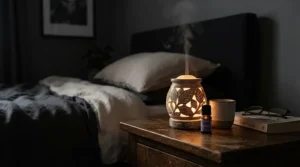
Soapstone Oil Burner Problems and How to Fix Them
Problem: oil stains or wax soaks into the stone. Carved stone can be more porous than architectural slab, and reviewers mention marks and wax absorbed through hairline cracks. Dilute oil in water, use a wax melt or a liner, and retire any burner with a visible crack.
Problem: slow warm-up. This is thermal mass at work. Start with a fresh tea light, close doors to limit draughts and consider a metal-lined bowl like the Indus Lifespace Handmade Soapstone Tealight Burner (Teal) if you mostly melt wax.
Problem: oil seeping onto the candle. One reviewer of the Pure Source India Handcrafted Soapstone Aroma Burner described this. Fill the bowl modestly, make sure it sits level, and stop using the burner if liquid reaches the flame.
Problem: crack on arrival. Photograph it, keep the packaging and ask for a replacement. A reviewer of a Pure Source India burner reported a quick swap after a crack.
Problem: burnt smell. Usually the bowl has dried out. Cool it, scrub gently, refill with water and start again.
Which Soapstone Oil Burner Fits Your Home? Three Real-World Scenarios
The student in a rented room. Space is tight, budget tighter, and the burner runs two or three evenings a week. The Nirvana Class NIRMAN Handmade Stone Aroma Burner (Leaf) fits a desk, and its 40 ml bowl is plenty for a 2–3 hour study session. Budget: under £12.
The wax-melt household. A living room, a few hours most evenings, and a love of strong scent throw. The Indus Lifespace Essential Oil Diffuser and Oil Warmer makes scent swaps easy thanks to its removable bowl. The Indus Lifespace Handmade Soapstone Tealight Burner (Teal) is the faster-melting alternative if you accept the lower rating. Budget: £12–£18.
The gift buyer. You want something that looks considered, arrives ready to use and doesn’t need a manual. The Pure Source India Handcrafted Soapstone Aroma Burner includes a tea light. The Pure Source India Stoneware Aroma Diffuser includes two. Budget: £10–£18, plus a bottle of oil. For a decorative angle, the KC Kullicraft Soapstone Elephant Carving Oil Burner adds personality, though it carries more batch-quality risk.
How to Choose a Soapstone Oil Burner
The best soapstone oil burner is the one that matches your room size, scent habits and tolerance for fiddling. Work through these six steps:
- Match bowl size to room size. A 40 ml bowl suits a desk. A broader bowl suits a bedroom and gives more safe burn time.
- Decide on oil or wax. Wax melts need a wider, shallower bowl or a metal liner. Oils need a bowl that holds water.
- Check the weight. Roughly 450–550 g feels planted. Under 300 g is easier to topple.
- Look at the carving. Intricate lattice looks lovely but means thinner stone, so buy from listings with plenty of recent reviews.
- Prefer a removable bowl if you change scents often. It makes cleaning far easier.
- Read the complaints first. Cracks, leaks and “not as pictured” tell you more than five-star adjectives.
Heat Retention Properties: Why Stone Behaves Differently
Soapstone’s party trick is thermal mass. Stove makers describe it as a stone that absorbs a fire’s sharp heat, stores it and releases it gently, and one manufacturer claims it can store roughly twice as much heat as steel. Independent figures are more modest. A fireplace-maker’s technical note puts soapstone’s specific heat capacity at about 785 J/kg·K against roughly 757 for firebrick, which is slightly better, not magical. Hearth-forum veterans make the same point: storage tracks mass first and material second.
What does that mean for a 300–550 g burner? The absolute heat store is small. The real payoff from its heat retention properties is smoothness. A thin ceramic bowl spikes hot and cools just as fast. A stone bowl climbs slowly, settles and shrugs off a flickering tea light. Reviewers of the Indus Lifespace Essential Oil Diffuser and Oil Warmer describe exactly this trade-off, noting the wax took a few minutes because the stone needs time to warm.
Three practical takeaways follow:
- Give the burner several minutes before judging scent throw.
- Heavier burners such as the Pure Source India Handcrafted Soapstone Aroma Burner suit those heat retention properties best.
- Don’t expect it to warm a room. It’s a fragrance tool, not a hearth.
Natural Stone Carving: From Quarry to Tea Light Opening
Soapstone’s defining trait for makers is softness. It’s a talc-rich metamorphic rock, and carving-grade stone is far softer than the countertop grade builders specify. That’s why a skilled hand can open lattice windows that would defeat granite. In the Tabaka hills of western Kenya, natural stone carving reportedly starts with a hammer-and-chisel outline, then soaking the stone in water to ease the carving. Sanding, washing, waxing and polishing follow, often across several pairs of hands. Academic work from Kyoto University on the Gusii soapstone industry describes quarrying and carving as a major regional livelihood.
Most burners sold in the UK come from Indian workshops, with retailers citing Rajasthan and Agra, but the logic is the same. Here is why natural stone carving matters to you:
- No two pieces match. That’s why reviewers of the Indus Lifespace Handmade Soapstone Tealight Burner (Teal) mention colour or design differences from the photo.
- Thin walls mean care. Fine natural stone carving looks beautiful but chips more easily than a plain block.
- Provenance varies. Kenyan press reports describe carvers squeezed by middlemen, so fair trade labelling is worth looking for.
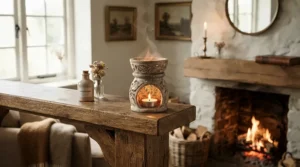
Natural Stone Oil Burners vs Ceramic, Glass and Electric Options
| Material | Heat Behaviour | Durability | Upkeep | Best For |
|---|---|---|---|---|
| Soapstone | Slow, even warming; holds heat | Soft; can chip or hairline-crack | Wipe clean; avoid soaking | Pure Source India Handcrafted Soapstone Aroma Burner buyers wanting weight and warmth |
| Glazed ceramic | Heats and cools faster | Hard glaze, but shatters if dropped | Easy to wipe; glaze resists stains | Stain-averse households |
| Glass | Visible, quick heating | Vulnerable to thermal shock | Easy to see residue | Minimalist styling |
| Electric warmer | Steady, flame-free | Depends on electrics | Needs a socket | Homes avoiding open flames |
Looking at the table, natural stone oil burners win on steady heat and tactile charm, while ceramic wins on glaze toughness and stain resistance. One retailer’s buying guide even argues ceramic is the better material, and that’s a fair view if you value easy cleaning above all. The Indus Lifespace Essential Oil Diffuser and Oil Warmer narrows the gap with its removable bowl. If you want no flame at all, an electric warmer is the sensible route, although a soapstone oil burner offers a cosier, quieter ritual.
Durable Burner Materials and Long-Term Cost
Durable burner materials aren’t equal, and “durable” means different things. Soapstone resists heat superbly and doesn’t craze like some glazes, but it’s soft, so it scratches and chips. Ceramic resists scratches but shatters on a hard floor. Glass is the most thermal-shock-sensitive of the group. Reviews of cheaper carved stone suggest the typical failure is a hairline crack, not a catastrophic break, so inspect yours regularly and retire it if it cracks.
| Tier | Indicative Price Range | Typical Replacement Trigger | Value Note |
|---|---|---|---|
| Budget soapstone (e.g. Nirvana Class NIRMAN Handmade Stone Aroma Burner (Leaf)) | Under £12 | Hairline crack or chip | Cheap enough to replace |
| Mid-range soapstone (e.g. Pure Source India Handcrafted Soapstone Aroma Burner) | Around £10–£18 | Cracks, stubborn staining | Best balance of price and reviews |
| Specialist hand-carved (non-Amazon makers) | High £20s to mid £30s | Rarely, if cared for | Pay for design, not performance |
Reading the table, the sweet spot is the middle. The extra money in the specialist tier buys finer carving and nicer finishes, not noticeably better heat behaviour. The running cost is modest, since a tea light is the main ongoing expense, so choose the burner you’ll actually enjoy looking at and use it carefully enough to last years.
Common Mistakes When Buying a Soapstone Oil Burner
- Buying on photos alone. Natural stone varies, so read recent reviews for “not as pictured” patterns.
- Ignoring the bowl. A bowl that’s too small drains in an hour, while one that’s too deep makes wax melts slow.
- Chasing a bargain on carving. Very intricate designs look gorgeous but crack more readily.
- Forgetting the tea light. Some listings include one, such as the Pure Source India Stoneware Aroma Diffuser with two, while others include none.
- Using the wrong flame. Standard tea lights only. Night lights burn hotter and longer.
- Trusting a lone five-star. Ten thousand ratings beat ten, and a mixed 3.7 can tell you more than a polished 5.0.
Safety, Regulations and UK Compliance Guide
Any burner with a naked flame needs respect. Fire services advise placing burners on a flat, heat-resistant surface such as a ceramic tile or metal plate, never under shelves, and never leaving them in a child’s bedroom. Don’t light one when drowsy, and keep it clear of children and pets.
On the regulatory side, UK Trading Standards guidance on candles, diffusers and oil heaters says that where a product needs water and only a little oil, or needs a specific heat source such as a tea light, written instructions to that effect are needed. In practice, check that your burner arrives with usage guidance, and read it. The same guidance points to the candle standards BS EN 15426, 15493 and 15494, which cover sooting, fire safety and labelling. Those apply to the candles themselves, so choose reputable tea lights.
Finally, ventilate the room, use oils sparingly and check oil safety if you share your home with cats or other pets.
FAQ
❓ Can you melt wax in a soapstone oil burner?
❓ Is it safe to leave a soapstone oil burner on overnight?
❓ How long does a tea light last in a soapstone oil burner?
❓ How do you clean a soapstone oil burner?
❓ Do soapstone oil burners crack?
Conclusion
A soapstone oil burner won’t win any awards for technology, and that’s precisely the point. It delivers a quiet, low-effort ritual: water, oil, flame, patience. Stone’s slow, even warmth is real, even if its heat retention properties are less miraculous than stove marketing suggests. And with a small tea light, the heat you actually get is gentle and satisfying.
If you want one recommendation, start with the Pure Source India Handcrafted Soapstone Aroma Burner, the best-evidenced all-rounder here. Choose the Nirvana Class NIRMAN Handmade Stone Aroma Burner (Leaf) for a small desk, the Indus Lifespace Essential Oil Diffuser and Oil Warmer if cleaning matters most, and the Indus Lifespace Handmade Soapstone Tealight Burner (Teal) if wax melts are your thing. For looks, the KC Kullicraft Soapstone Elephant Carving Oil Burner is charming but inspect it carefully on arrival, as is the Artist Haat 3″ Oil Burner, whose review evidence is thinner. The Pure Source India Stoneware Aroma Diffuser works as a gift. Whichever you pick, buy sensibly, never leave a flame unattended and enjoy the glow.
Recommended for You
- Ceramic Oil Burner For Essential Oils: 7 Best UK Picks (2026)
- Ceramic Wax Burners: 7 Best Picks For Cosy UK Homes (2026)
- Wax Warmer For Small Spaces: 7 Best Picks For UK Flats (2026)
Disclaimer: This article contains affiliate links. As an Amazon Associate, I earn from qualifying purchases. If you purchase products through these links, we may earn a small commission at no additional cost to you.
✨ Found this helpful? Share it with your friends! 💬🤗
