In This Article
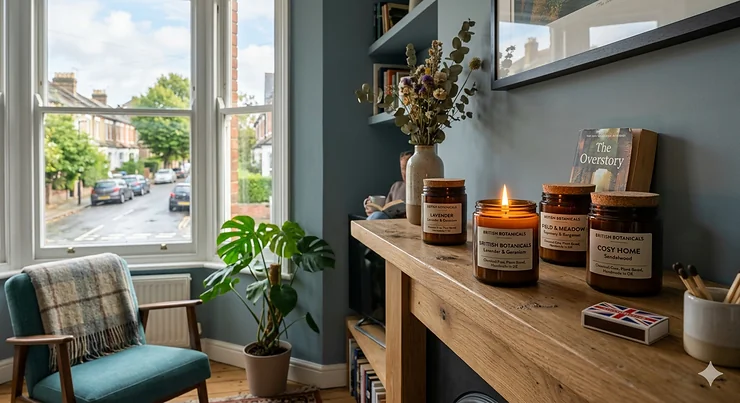
There’s a particular kind of British evening that only a candle can fix. The heating’s just clicked off, the rain’s doing that sideways thing it does in February, and you want the room to feel like somewhere you’d actually choose to be. The trouble is, half the candles sold for this exact purpose are made from a petroleum by-product, scented with a fragrance “blend” that nobody will name, and wicked with whatever happened to be cheapest that quarter.

Chemical free candles solve that problem, at least in theory — a candle made from a plant-based or beeswax base, scented with essential oils or carefully vetted fragrance oils, and burned on a cotton or wooden wick rather than anything metal-cored. The catch is that “chemical free” isn’t a regulated term, so it gets slapped on packaging with wildly varying levels of honesty. I’ve spent the past few days going through Amazon.co.uk’s actual current listings — not press releases, not brand websites, the real product pages with real reviews — to find seven candles that earn the label rather than just borrowing it. Some are soy. One is pure beeswax. One I’m including specifically because its wax blend isn’t quite as “free” as the name promises, and I think that’s worth knowing before you spend your money.
What follows is genuinely opinionated. No candle here is paid placement, and a couple of the entries come with a “yes, but” attached, because that’s how buying decisions actually work.
Quick Comparison Table
| Candle | Wax Type | Price Range (GBP) | Best For |
|---|---|---|---|
| NEOM Organics Real Luxury (1 Wick) | 100% naturally derived wax | £30–£40 | Bedroom de-stress ritual, gifting |
| St Eval Bay & Rosemary Tin | Mineral/vegetable wax blend | £12–£20 | Budget-conscious buyers who like Cornish branding |
| This Works Lavender & Roman Camomile | Soy/vegetable wax + essential oils | £20–£30 | Bathtime wind-down, insomnia-prone households |
| Wax Lyrical Made in England Jar | Wax fill, fragrance oil | £10–£18 | Everyday scenting on a tight budget |
| Norfolk Beeswax Company 6-Pack Pillars | 100% pure beeswax | £15–£25 | Allergy-conscious homes, dinner tables |
| Ocoee House Soy Candle (Loch Lomond) | 90% soy wax / 10% fragrance oil | £25–£35 | Buyers wanting a small-batch Scottish maker |
| Wick & Windsor Cosy Collection Trio | Soy wax, wooden wicks | £25–£35 | Gifting, three scents in one box |
A glance down that “wax type” column tells you most of what you need to know before reading another word. Two of these candles — the NEOM and the beeswax pillars — are about as close to genuinely chemical free as mass-market candles get in the UK. The St Eval and Wax Lyrical entries earn their place on reputation and price rather than purity, and I’ll be upfront about that further down. If your priority is a true paraffin-free burn rather than a “natural-sounding” one, weight your decision toward the soy and beeswax options; if you mostly just want your flat to smell less like last night’s dinner, the cheaper picks will do the job perfectly well.
💬 Just one click — help others make better buying decisions too! 😊
✨ Don’t Miss These Exclusive Deals!
🔍 Take your home fragrance game further with these carefully researched picks. Click through to check current pricing and availability on Amazon.co.uk — stock and prices shift constantly, so it’s worth a look before you commit.
Top 7 Chemical Free Candles in the UK — Expert Analysis
1. NEOM Organics London Real Luxury Scented Candle
NEOM Organics London Real Luxury is the candle equivalent of a spa appointment you didn’t have to book. It’s hand-poured using fully naturally derived wax — a blend of soy, rapeseed and coconut rather than a single ingredient — and scented entirely with natural fragrance built from up to 24 essential oils, including lavender, jasmine and Brazilian rosewood. There’s no synthetic fragrance and no chemical binder in the mix, which in practice means it burns without the black soot ring that paraffin candles love to leave around the rim of the jar.
What the spec sheet won’t tell you is how forgiving this candle is for British flats with limited ventilation — because the fragrance load comes from essential oils rather than a heavier synthetic blend, it doesn’t overwhelm a small bedroom the way some “luxury” candles can. NEOM has also held B Corp certification, which matters if you’re choosing between brands on ethics as well as scent. Reviewers consistently mention the calming effect of the lavender-jasmine-sandalwood combination, with several noting it as a genuine sleep aid rather than just a nice smell.
✅ Genuinely natural wax and fragrance, no chemical binders ·
✅ B Corp certified ·
✅ Strong, well-reviewed scent throw
❌ One of the pricier picks on this list ·
❌ Burn time (around 35–50 hours depending on size) is shorter than some soy competitors
Price & verdict: Sits in the £30–£40 range depending on size — check current price on Amazon.co.uk, as it fluctuates with promotions. If you only buy one “proper” chemical free candle this winter, this is the one I’d point you toward.

2. St Eval Bay & Rosemary Scented Tin Candle
St Eval is the candle brand every British homeware shop seems to stock, and there’s a reason for that — it’s been hand-poured on a working farm in North Cornwall for over 25 years, and the Bay & Rosemary scent is a genuinely lovely, herbal, un-cloying fragrance that doesn’t smell like every other “coastal” candle on the market.
Here’s the bit most buyers overlook, though: St Eval’s own product information describes its wax as a combination of mineral and vegetable waxes, blended specifically for burn performance and scent throw. That means it isn’t a fully chemical free candle in the strictest sense — there’s a paraffin component in there. I’m including it anyway because it’s honest, well-reviewed, and a useful example of how “natural-sounding” branding and “chemical free” aren’t always the same claim. If 100% natural wax is a hard requirement for you, this isn’t your pick; if you want a lovely-smelling British candle at a fair price and you’re comfortable with a wax blend, it’s a genuinely good one.
✅ Made in Cornwall, well-established maker ·
✅ Subtle, sophisticated scent (not overpowering) ·
✅ Roughly 45-hour burn time on tins
❌ Not a fully natural wax — contains a mineral wax component ·
❌ Scent throw is gentler than synthetic-fragrance competitors, which some reviewers find too subtle
Price & verdict: Around £12–£20 depending on format. Good value for the brand reputation, but read the ingredients if “chemical free” is a strict requirement rather than a vibe.
3. This Works Lavender & Roman Camomile Candle
This Works built its name on skincare “rooted in science,” and that sensibility carries over into its candle range. The Lavender & Roman Camomile and Deep Sleep Heavenly variants are hand-poured and blended with genuine essential oils rather than a synthetic fragrance compound, with a single wick delivering around 40 hours of burn time.
The real-world value here is in the bedtime ritual rather than the room-filling scent — This Works candles are designed to be lit in the last hour before bed, much like the brand’s pillow sprays, and several UK reviewers specifically mention using them alongside a bath routine rather than as a general home-fragrance candle. That’s a narrower use case than some entries on this list, but it’s a well-executed one, and the recyclable glass jar is a small but genuine point in its favour for anyone trying to cut down on packaging waste.
✅ Essential-oil-based fragrance, not synthetic ·
✅ 40-hour burn time, solid for the price point ·
✅ Recyclable glass jar
❌ Scent is deliberately subtle — not for anyone wanting a strong room-filling throw ·
❌ Narrower “bedtime ritual” use case than an all-purpose candle
Price & verdict: Typically in the £20–£30 range. Best suited to buyers who want a wind-down candle specifically, rather than an everyday scent.
4. Wax Lyrical Made in England Jar Candle
Wax Lyrical is the UK’s largest home fragrance manufacturer, producing everything from the Lake District using green energy from an on-site wind turbine — which is a genuinely nice detail for a budget-friendly brand. The candles themselves use a wax-fill formula and the company is upfront that its fragrances are 100% fragranced, meaning these rely on fragrance oils rather than pure essential oils.
I’m flagging that distinction deliberately, because it’s the kind of detail that separates marketing language from an actual chemical free claim. Wax Lyrical candles are vegan-friendly (aside from the beeswax-containing lines, which are clearly labelled) and manufactured to a decent standard, but they’re a “naturally inspired, British-made, reasonably priced” pick rather than a strictly chemical free one. For everyday scenting where budget matters more than purity — a hallway, a downstairs loo, a flat you’re not planning to fill with essential-oil aromatherapy — this is a sensible, unpretentious choice.
✅ Made in England with renewable energy ·
✅ Genuinely affordable ·
✅ Wide range of scents and formats
❌ Uses fragrance oil rather than essential oils — not a strict “chemical free” claim ·
❌ Burn times vary noticeably by range (some as short as 35 hours)
Price & verdict: Usually £10–£18. A solid budget pick, but go in knowing it’s “naturally branded” rather than chemical free in the strictest sense.
5. Norfolk Beeswax Company Handmade Natural Beeswax Candles
If you want the closest thing to a genuinely chemical free candle on this entire list, Norfolk Beeswax Company‘s handmade pillars are it. These are 100% natural beeswax, with no petroleum, no paraffin, and no added synthetic fragrance — the scent, what little there is, comes purely from the honey-adjacent aroma of the wax itself.
What’s worth knowing in practice: beeswax candles burn with a noticeably brighter, warmer flame than soy or paraffin, and they’re naturally dripless when burned correctly, which matters more than you’d think in a British home where mantelpieces and side tables are often inherited furniture you’d rather not ruin. Reviewers do flag inconsistent burn times batch to batch, since beeswax is a natural product with seasonal variation — that’s a feature of buying something genuinely unprocessed, not really a flaw, but it’s worth setting expectations accordingly.
✅ As close to truly chemical free as candles get ·
✅ No synthetic fragrance, no paraffin ·
✅ Doesn’t drip when burned properly
❌ Minimal scent — not for anyone wanting a strong fragrance ·
❌Burn time can vary between batches, being a natural product
Price & verdict: A 6-candle set typically runs £15–£25 — genuinely good value for pure beeswax. The pick for anyone with fragrance sensitivities or small children in the house.

6. Ocoee House Soy Wax Candle, Hand Poured in Loch Lomond
This is the lesser-known name on the list, and I think it deserves more attention than it currently gets. Ocoee House is a small Scottish design studio operating out of Loch Lomond, hand-pouring candles in genuinely small batches using a 90% soy wax to 10% fragrance oil ratio, with a German-made eco wick — a flat, core-less cotton wick rather than anything metal-cored.
The brand states its candles are free from phthalates, parabens and what it describes as “harsh chemicals,” and the organic and vegan positioning is backed by actual ingredient transparency on the listing rather than vague claims. For UK buyers specifically, it’s worth knowing this is a small operation, so stock on individual scents can run low — if you find a fragrance you like (Clean Citrus and Fresh Linen both come up often in reviews), it’s worth buying more than one in case it sells through.
✅ Small-batch, transparent ingredient list ·
✅ Organic and vegan certified ·
✅ Generous 45–65 hour burn time depending on size
❌ Stock availability can be inconsistent for a small maker ·
❌ Less brand recognition than the bigger names on this list
Price & verdict: Roughly £25–£35 depending on size. A genuinely good find for anyone who likes supporting a smaller UK maker rather than the usual high-street names.
7. Wick & Windsor Cosy Collection Scented Candle Gift Set
For gifting specifically, Wick & Windsor‘s Cosy Collection trio is hard to beat on presentation. Three hand-poured soy wax candles with crackling wooden wicks arrive in a properly considered gift box, each scented differently — the wooden wick adds a genuine, faint fireplace-crackle sound that’s a nice touch in a dark front room come November.
The practical upside of soy wax with a wooden wick is a cleaner, lower-smoke burn with a steadier scent throw than a thin cotton wick tends to manage, and the set format means you’re not committing to a single scent before you know if you’ll like it. This is squarely a gifting product rather than an everyday workhorse candle, so judge it on presentation and variety rather than expecting beeswax-level purity.
✅ Genuinely nice presentation for gifting ·
✅ Soy wax with wooden wicks, clean burn ·
✅ Three scents in one set reduces buyer’s remorse
❌ Smaller individual candle sizes than single full-size jars ·
❌ Premium price for the total wax volume you’re getting
Price & verdict: Typically £25–£35 for the trio. A strong Christmas or birthday pick rather than a daily-use bargain.
How to Choose Chemical Free Candles in the UK
- Read the wax line first, not the front label. “Natural,” “eco” and “clean” aren’t regulated terms in the UK — the ingredients list (or product description on the Amazon.co.uk listing) is where the actual wax type gets disclosed.
- Check the wick material. Cotton or wooden wicks only; UK manufacturers stopped using lead-core wicks decades ago, but imported candles from outside the EU/UK aren’t always held to the same standard.
- Match fragrance source to sensitivity. Essential-oil candles (NEOM, This Works) suit fragrance-sensitive households; fragrance-oil candles (Wax Lyrical, Ocoee House) throw scent further but rely on synthesised compounds.
- Consider your room size and ventilation. Smaller, less-ventilated UK flats and terraced houses benefit from lighter-scented candles; a strong synthetic throw in a poorly ventilated room can feel overwhelming fast.
- Decide whether burn time or scent strength matters more. Beeswax wins on purity and burn quality but loses on fragrance; soy and natural-wax blends usually strike the better balance for most homes.
- Budget for the format you’ll actually use up. A £35 candle that sits half-burned in a drawer is worse value than a £15 one you finish.
- If buying as a gift, prioritise presentation and variety over purity. Gift sets like Wick & Windsor’s trio are judged differently to a candle you’ll burn solo every evening.
Practical Usage Guide: Getting the Most From Your Chemical Free Candle
Natural wax candles reward a bit more patience than paraffin ones, and most disappointing first experiences come down to skipping this step. On first light, let the candle burn long enough for the entire surface to pool to the edges of the container — usually one to two hours for soy, longer for beeswax pillars. Stop short of that and you’ll get “tunnelling,” where the candle burns a narrow well down the middle and leaves wax stranded uselessly at the edges for the rest of its life.
Trim the wick to around 5–10mm before every burn; natural wicks mushroom and blacken faster than treated cotton, and an untrimmed wick is the single biggest cause of soot on an otherwise clean-burning candle. In British homes specifically, keep natural wax candles away from draughty windowsills and radiators — soy and beeswax soften more than paraffin in heat, and a south-facing sill in a rare burst of summer sun will warp a jar candle faster than you’d expect. Store unused candles somewhere cool and dark rather than a damp bathroom cabinet or a garage that swings between freezing and humid through a typical winter; that temperature cycling is what causes the “frosting” (a pale, slightly textured surface) that soy wax is prone to.
Real-World Scenarios: Matching the Right Candle to Your Home
Picture a one-bedroom flat in Zone 2 London with a single window that doesn’t fully open and a downstairs neighbour who complains about everything. That’s a household where scent throw needs to be modest and burn quality needs to be spotless — the NEOM Real Luxury or the Norfolk Beeswax pillars both make more sense here than anything with a heavy fragrance-oil load.
Now picture a semi-detached family home in Sheffield with three kids, a dog, and a kitchen that always smells faintly of last night’s cooking by mid-morning. Scent strength matters more here, and ventilation is less of a constraint — a Wax Lyrical jar candle or one of the stronger Ocoee House scents will do the job without anyone needing to mortgage the good china for it. And for the retired couple in a stone cottage somewhere in the Cotswolds, where damp evenings and an open fire already define the atmosphere, St Eval’s understated Cornish scents fit the aesthetic far better than anything trying too hard to compete with woodsmoke.

Common Mistakes When Buying Chemical Free Candles
The single biggest mistake is trusting front-of-pack language over the actual ingredients list — “natural fragrance” can still mean a fragrance oil derived partly from synthetic isolates, and “eco” has no fixed legal definition in UK retail. The second is assuming a higher price automatically means a purer product; St Eval’s mixed wax blend sits at a similar price point to some fully natural soy candles, which is exactly why reading the wax line matters more than the price tag.
A third, very British mistake: buying a strongly scented candle for a small, poorly ventilated room because it smelled fantastic in a spacious shop. Scent throw behaves completely differently in a 1930s terraced house with single glazing than it does in a ventilated retail unit, and what felt “just right” in John Lewis can feel like a perfume counter exploded in your hallway. Finally, plenty of buyers underestimate how much wick maintenance affects soot and burn quality — a £40 candle burned with an untrimmed wick will soot up a white ceiling just as readily as a £4 one.
Chemical Free vs Traditional Paraffin Candles: What the Science Actually Says
| Factor | Paraffin Wax | Chemical Free (Soy/Beeswax) |
|---|---|---|
| Wax source | Petroleum by-product | Plant-based (soy, rapeseed) or beeswax |
| Soot production | Generally higher, especially with poor wicks | Generally lower when wick is properly trimmed |
| Burn time | Often shorter per gram | Often longer, slower burn |
| Scent throw | Typically stronger (synthetic fragrance load) | Often gentler, unless heavily fragranced |
| Cost | Usually cheaper | Usually £5–£15 more per comparable size |
This is genuinely a more contested area than candle marketing tends to admit. A widely cited 2009 study claiming paraffin candles release dangerous chemicals at alarming rates has been criticised for never being peer-reviewed, and trade bodies including the European Candle Association have disputed its methodology, arguing there’s no robust scientific evidence that wax type alone makes candle smoke harmful at normal household exposure levels. At the same time, independent toxicology commentary continues to flag synthetic fragrance oils — used in both paraffin and some “natural” candles — as a source of phthalates, and the UK’s own indoor air quality guidance from UKHSA treats household volatile organic compounds as worth monitoring generally, even though it doesn’t single out candles specifically.
The honest takeaway: wick maintenance, ventilation and fragrance source probably matter more for day-to-day air quality than whether the base wax is paraffin or soy. That doesn’t make chemical free candles pointless — fewer synthetic inputs is a reasonable precaution, and most of the soy and beeswax picks above genuinely do burn cleaner — but it does mean a £40 “natural” candle burned with an untrimmed wick in a sealed room isn’t automatically healthier than a well-maintained £8 one.
UK Regulations, Green Claims & What “Chemical Free” Really Means Legally
Here’s the bit most buying guides skip entirely, and it’s the bit that actually protects you as a shopper. “Chemical free” is, strictly speaking, a meaningless phrase — everything, including water and soy wax, is made of chemicals. What the term is really standing in for is “free from synthetic or petroleum-derived ingredients,” and UK consumer protection law is increasingly unforgiving of brands that blur that distinction.
The Competition and Markets Authority’s Green Claims Code requires that environmental and “natural” claims be accurate, evidenced, and not give a false impression of a product’s actual composition — guidance reinforced by updated CMA supply-chain enforcement rules published in early 2026, which extend liability to retailers repeating a manufacturer’s claims, not just the brand making them. For candles specifically, there’s also a recognised industry sooting-behaviour standard (EN 15426) that legitimate UK manufacturers test against, separate from any wax-purity claim. Under the Consumer Rights Act 2015, you’re entitled to a product that matches its description — so if a candle is marketed as chemical free and the ingredients list contradicts that, you have grounds for a return within the standard cooling-off period, on top of Amazon’s own returns process. Northern Ireland buyers should note that EU-aligned labelling rules can occasionally differ slightly from the rest of the UK, though this rarely affects candle imports in practice.
Long-Term Cost & Maintenance in the UK
Soy and beeswax candles cost more per unit but burn measurably longer than equivalent paraffin candles, which narrows the gap more than the sticker price suggests. A £30 NEOM candle delivering 35–50 hours works out to roughly 60–85p per hour of burn; a £6 supermarket paraffin candle delivering 20 hours of patchy, sooty burn costs around 30p per hour but leaves you cleaning soot off the ceiling and replacing it twice as often. Factor in that natural wax candles need less frequent wick replacement when properly trimmed, and the long-term running cost gap shrinks considerably.
Storage matters for total cost of ownership too — soy candles left in damp UK garages or unheated sheds over winter are prone to frosting and uneven texture, which doesn’t affect performance much but does affect how long an unused candle looks “shelf-ready” if you’re stockpiling for gifts. Buying multi-packs (like the Norfolk Beeswax 6-pack) during sale periods is generally the better long-term economy than buying single premium candles repeatedly.
Frequently Asked Questions
❓ Are chemical free candles actually better for indoor air quality in the UK?
❓ Do Amazon.co.uk chemical free candles qualify for free UK delivery?
❓ Is soy wax or beeswax better for a chemical free candle?
❓ Can chemical free candles still trigger allergies?
❓ Why do some 'natural' candles in the UK still contain paraffin?
Conclusion
If there’s one thing worth taking away from all this, it’s that “chemical free” deserves a moment’s scrutiny rather than blind trust, even on a product as small and seemingly harmless as a candle. The seven picks above span genuinely different priorities — NEOM and the Norfolk beeswax pillars for anyone who wants the real thing, Ocoee House and Wick & Windsor for variety and presentation, and St Eval and Wax Lyrical included precisely because their branding outpaces their ingredients slightly, which is worth knowing before you pay a premium for a story rather than a formulation.
None of this needs to be complicated. Check the wax line, trim your wick, give the candle room to breathe, and buy the one that actually matches what you’re hoping to get out of a quiet evening at home — rather than the one with the prettiest tin.
Recommended for You
- Best Natural Candles UK 2026: 7 Clean-Burning Picks You’ll Love
- Soy vs Paraffin Candles UK: 7 Best Picks for a Cleaner Burn 2026
- Best Soy Wax Candles UK 2026: 7 Top Picks for Clean, Long-Lasting Fragrance
Disclaimer: This article contains affiliate links. As an Amazon Associate, I earn from qualifying purchases. If you purchase products through these links, we may earn a small commission at no additional cost to you.
✨ Found this helpful? Share it with your mates! 💬🤗
