
In This Article
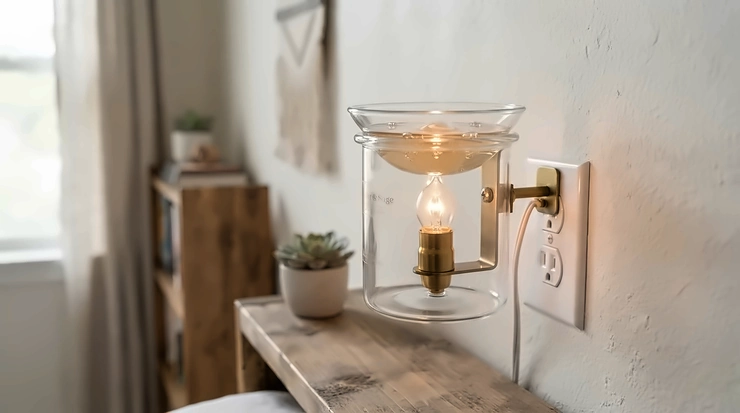
Walk into a hallway on a dark November evening and you can usually tell within three seconds who owns a good plug in wax warmer. There’s no flicker, no soot and no hunting for a lighter. You get a low amber glow and a smell that’s suspiciously like a bakery in Edinburgh. That’s the quiet charm of plug in wax warmers: all the cosiness of a candle, minus the naked flame.
Fire crews aren’t being dramatic about flames. Lancashire Fire and Rescue Service describes candles as one of the most common causes of home fires and actively recommends flameless alternatives. An electric melter isn’t risk-free, because it’s still a hot, mains-powered appliance. It does remove the open flame, and that’s a big step. The same service also advises melting wax for no more than four hours at a stretch, which shapes how you should use any of the warmers below.
This guide covers seven real products, from budget glass burners to ceramic classics. It pays particular attention to socket wax warmers that sit flush on the wall, compact plug-in fragrance warmers for tight spots, and night-light warmers that double as ambient lighting. It also covers how low-wattage bulbs affect melting and running costs, plus the often-ignored realities of hallway and bathroom use.
Everything here comes from spec analysis and aggregated review sentiment, not claimed hands-on testing. Prices are ranges, because they change constantly.
Quick Comparison: 7 Plug In Wax Warmers at a Glance
| Product | Style | Price Range | Best For |
|---|---|---|---|
| Astin of London Electric Wax Melt Burner | Night-light style electric burner | Around £15 | Astin of London suits first-time buyers who want a big review pool |
| Yankee Candle Organic Pattern ScentPlug | Oil-refill plug-in diffuser | Under £10 (base) | Yankee Organic Pattern ScentPlug suits hands-off, mess-free fragrance |
| Yankee Candle Kensington Ceramic Electric Melt Warmer | Ceramic electric melt warmer | £15-£20 range | Kensington suits décor-led buyers |
| Cello Glistening Glass Plug-In Wax Melt Burner | Glass plug-in, wax and oil | Check current price | Cello Glistening Glass suits wax-and-oil flexibility |
| Aroma Highland Cow Plug In Wax Melt Warmer | Novelty compact silhouette | Low £20s (sibling models) | Aroma Highland Cow suits gifts and hallway charm |
| inrorans 3D Glass Electric Wax Melt Warmer | PTC heating, LED glow | Check current price | inrorans 3D Glass suits bulb-free convenience |
| SALKING Plug-in Wax Burner | Glass, small-room focus | Check current price | SALKING suits compact landings and spare rooms |
Looking at the table, Astin of London and Yankee Organic Pattern ScentPlug are the safest low-spend starting points, though they work quite differently: one melts wax, the other warms oil refills. If you want to pay a bit more for looks, Kensington and Aroma Highland Cow lead on style. Those who’d rather never change a bulb should read about inrorans 3D Glass below.
💬 Just one click — help others make better buying decisions too!😊
Top 7 Plug In Wax Warmers: Expert Analysis
These seven cover the realistic spread: budget, mid-range and premium, wax-melting and oil-refill, bulb-heated and bulb-free.
1. Astin of London Electric Wax Melt Burner — biggest review pool in this line-up
The standout is evidence: with roughly 1,500 ratings averaging around 4.2 out of 5 at the time of research, you’re reading a pattern rather than a handful of opinions. This is an electric, night-light-style burner built for wax melt discs and tarts (sold separately), so the glow and the heat arrive together.
The listing is thin on bulb wattage, and that matters because wattage is the dial that sets melting speed and dish temperature. Before buying, check which replacement bulb it takes and how easy it is to find.
On paper, this is a sensible first warmer for replacing a living-room or landing candle, because it’s decorative enough to leave on display. Dimensions are less clear, so measure your socket clearance if space is tight.
Reviewers of bulb-driven warmers generally report two recurring gripes: slow melting and bulbs that fail after a few months. Treat a spare bulb as part of the real cost.
Pros:
- ✅ Large review base gives a trustworthy signal
- ✅ Night-light glow doubles as ambient lighting
- ✅ Budget-friendly entry point
Cons:
- ❌ Bulb heat means spare bulbs are essential
- ❌ Listing detail on wattage and size is limited
Around £15 at the time of research; good value if you want a proven, low-risk starter (check current price).

2. Yankee Candle Organic Pattern ScentPlug — three-level intensity, zero wax mess
It’s the only pick here with an adjustable dial. Retailer listings describe three intensity levels, with each oil refill lasting around 30 days.
This is an oil-refill diffuser, not a wax melter, so it belongs in the compact plug-in fragrance warmers camp. It comes with a UK three-pin plug only, and the starter kits are small, roughly 8cm tall and 8cm across, so it barely intrudes on a socket.
My analysis: this is the best option where you don’t want to babysit anything. Think a hallway or a spot near a bathroom door, where scraping out wax would get old fast. The trade-off is ongoing refill spend and no wax melts, so it won’t satisfy anyone who loves rotating melt flavours.
Ratings across Yankee’s ScentPlug bases and refills sit around 4.7 out of 5 on a UK price-comparison site, which is consistently strong. As ever, fragrance preference is personal, so check which scent you’re buying.
Pros:
- ✅ Adjustable fragrance strength across three levels
- ✅ No wax to scrape or replace
- ✅ Very compact against the wall
Cons:
- ❌ Can’t melt wax melts
- ❌ Refills add a recurring cost
Under £10 for the base, with refills in the high-£7 range; excellent entry value (check current price).
3. Yankee Candle Kensington Ceramic Electric Melt Warmer — speckled ceramic that looks like décor
The standout is its look: a curved, hourglass-style ceramic in speckled cream with a pastel glaze. This is a flameless electric warmer that heats a ceramic tray so melts soften and release scent without a tea light.
Listings give it as about 10cm in height and diameter, and it ships with a UK Type G three-pin plug only. Before buying, confirm in the listing whether it sits on a surface or in a socket, because that affects hallway suitability.
From the specs, this is for people who treat their warmer as a decorative object. Ceramic holds heat gently, which tends to suit slower, softer scent release. The flip side is that it takes up more room than a flush socket unit.
I couldn’t verify an aggregated review score for this specific listing, so read the three-star reviews for heat-up speed, and note that one retailer showed it out of stock at the time of research.
Pros:
- ✅ Handsome ceramic that suits shelves and sideboards
- ✅ Flameless, with no tea lights to replace
- ✅ Designed around Yankee Candle melts
Cons:
- ❌ Bulkier than true socket-mounted units
- ❌ Availability can fluctuate
£15-£20 range; fair value if looks matter as much as scent (check current price).
4. Cello Glistening Glass Plug-In Wax Melt Burner — wax and oil in one glass unit
Flexibility is the hook: the listing positions it as both a wax melt burner and an electric oil burner, with a glass body and wall-plug design.
Dual-use sounds great, but it comes with homework. Wax melts and essential oils need different dish behaviour, and mixing them carelessly can leave residue that muddles scents. Read the listing’s guidance on oils before buying.
On balance, this suits someone who dabbles: wax in winter, a few drops of oil when the mood strikes. The glass construction should look at home in a bedroom or landing. As with any glass-fronted warmer, the surface gets hot, so keep it away from soft furnishings.
I couldn’t verify a reliable aggregate rating for this listing at the time of research, so I won’t invent one. Check recent reviews specifically for glass finish, bulb life and whether the plug sits firmly in the socket.
Pros:
- ✅ Listed for both wax melts and oils
- ✅ Wall-plug glass design saves surface space
- ✅ Decorative glow suits small rooms
Cons:
- ❌ Aggregated review data wasn’t verifiable
- ❌ Oil use needs careful dish management
Budget end of the range, but I couldn’t confirm a figure; check current price before deciding.
5. Aroma Highland Cow Plug In Wax Melt Warmer — novelty design with a shimmer glow
Personality is the point. This sits in a range of silhouette-style plug-ins that retailers describe as compact, around 12-13cm tall, with a shimmering glow.
Sibling models in the range plug straight into a UK socket and include an on/off switch, according to retailer listings. A switch matters more than it sounds: it lets you stop melting without unplugging a hot unit.
For anyone buying a gift, or wanting a conversation piece in a hallway, this is hard to beat on charm. A 13cm unit hanging off a socket does add weight, though, so check that your socket is firm and not loose in the wall plate.
I couldn’t verify review aggregates for the Highland Cow listing specifically, so consider the range’s other designs a reference point only. Look for comments on how quickly it melts and whether the bulb is replaceable.
Pros:
- ✅ Fun design that works as a gift
- ✅ Compact silhouette with decorative glow
- ✅ On/off switch on sibling models
Cons:
- ❌ Listing-specific review data wasn’t verifiable
- ❌ Weight on the socket needs checking
Sibling models appear in the low £20s at other retailers; fair for the novelty, so check current price.
6. inrorans 3D Glass Electric Wax Melt Warmer — PTC heating, so no bulb to replace
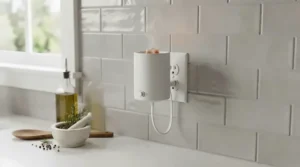
This is the bulb-free option. The listing highlights a PTC heating element, a reusable silicone tray and seven colour-changing LEDs.
PTC elements are self-regulating, which means the heat stays more consistent and you aren’t racing to replace a dying filament. The LED glow also decouples light from heat, which is useful for night-light warmers, since you can enjoy the colour without hunting for the right bulb.
Based on the spec comparison, this is the pick for anyone who’s been burned, quite literally, by bulb failures. A silicone tray also makes wax removal far simpler than scraping glass. The trade-off is that PTC melting can feel more gradual than a bulb-driven dish.
Similar PTC warmers in US roundups attract praise for no-bulb convenience, but I couldn’t verify a score for this exact UK listing. Look for notes on heat-up time and colour-cycling that’s too bright for a bedroom.
Pros:
- ✅ No bulb to buy or replace
- ✅ Silicone tray makes cleaning easier
- ✅ Seven-colour LED glow
Cons:
- ❌ Melting can be slower than bulb warmers
- ❌ Colour cycling may be too bright for sleeping areas
Check current price; I couldn’t confirm a reliable range, but expect budget-to-mid pricing for the convenience.
7. SALKING Plug-in Wax Burner — built for compact, tucked-away rooms
SALKING’s glass electric burner is listed for bedrooms and bathrooms, which tells you the intended audience: small spaces and short bursts of fragrance.
The listing frames it as a decorative plug-in with night-lamp glow, aimed at small-room use. That’s useful for landings, spare rooms and downstairs loos. Be careful with the bathroom claim, though: UK bathroom wiring rules restrict standard sockets, so see the hallway and bathroom use section before assuming it fits.
My view: it’s a sensible compact option with a modest footprint. Its main edge is positioning rather than a standout spec, so judge it by bulb life and dish size. Wax capacity matters more than it seems, because a tiny dish means topping up often.
I couldn’t verify review aggregates for the UK listing at the time of research. Skim the most recent reviews for melting speed and whether the glass stays stable on the socket.
Pros:
- ✅ Small-room focus suits landings and spare rooms
- ✅ Decorative glow doubles as a night lamp
- ✅ Glass body is easy to wipe clean
Cons:
- ❌ Review data wasn’t verifiable
- ❌ Bathroom suitability depends on your wiring
Check current price; likely budget-friendly, but I couldn’t confirm a figure.
Top 7 Specs and What to Check
| Product | Heat Source | Glow | Key Spec to Verify | Best For |
|---|---|---|---|---|
| Astin of London | Bulb-type (typical) | Night-light style | Bulb wattage | Starter buyers |
| Yankee Organic Pattern ScentPlug | Oil-refill warming | Minimal | 30-day refill | Mess-free fragrance |
| Kensington | Electric ceramic | Subtle | Surface vs socket use | Décor-first buyers |
| Cello Glistening Glass | Check listing | Glass glow | Oil vs wax dish | Dabblers |
| Aroma Highland Cow | Check listing | Shimmer | Switch and weight | Gifts |
| inrorans 3D Glass | PTC element | Seven colours | Melt speed | Bulb-free fans |
| SALKING | Check listing | Night-lamp | Dish size | Small rooms |
Reading across, Yankee Organic Pattern ScentPlug and inrorans 3D Glass both avoid the bulb-replacement chore, but for different reasons: one doesn’t melt wax and the other uses PTC. If you’re comparing wax-melting options only, Astin of London has the strongest evidence and Aroma Highland Cow has the most personality. The “check listing” cells are your homework, not a flaw.
✨ Don’t Miss These Exclusive Deals!
🔍 Take your home fragrance to the next level with these carefully selected products. Click on any highlighted item to check current pricing and availability. These picks will help you create a cosy, flame-free atmosphere your family will love!
Practical Usage Guide: Your First 30 Days With Plug In Wax Warmers
Setup. Choose a socket above skirting-board height, clear of curtains, bedding and fabrics, and put the warmer on a socket you can reach to switch off. Essex County Fire and Rescue Service advises against using candle warmers or hot plates for wax melts, so stick to a unit made for the job.
First use. Start with a single small piece of wax and let it liquefy. Remember the four-hour limit, then switch off at the socket. Don’t pour more wax over a pool that’s already liquid; remove the old wax first once it’s solid.
Maintenance schedule.
- Weekly: let it cool fully, then lift out the hardened wax and wipe the dish.
- Monthly: check the plug for scorch marks and the socket for looseness.
- Every few months: replace the bulb on bulb-driven models with the same specified type.
Common mistakes in the first 30 days.
- Overfilling the dish.
- Moving the unit while hot.
- Adding water.
- Leaving it on overnight.
- Using a higher-wattage bulb to “melt faster”.
Here’s a rule worth remembering: one small piece at a time beats a heaped dish. A hot dish that’s too full spills, and spilt wax on a low skirting socket is a good way to ruin a weekend.

Real-World Scenarios: Matching Plug In Wax Warmers to Real Homes
Scenario 1: The renter with a draughty hallway. Budget is around £15, usage is a couple of evenings a week, and flames are banned by the tenancy. Astin of London is the low-risk choice, with a big review pool and a night-light glow. Add a spare bulb and you’re done.
Scenario 2: The family with a toddler and a dog. Floor-level sockets are the enemy here. Retailer safety notes warn against using plug-in warmers in low sockets that children or pets can reach. The Yankee Organic Pattern ScentPlug has no hot wax dish, and you can use a higher socket if you have one. Check the unit’s own warnings and keep everything out of reach.
Scenario 3: The flat-dweller who wants ambience on a budget. Around £20, daily evening use, mostly in a living room. inrorans 3D Glass delivers colour and avoids bulb fuss, while Kensington is the pricier, prettier option if you prefer ceramic.
Scenario 4: The gift-buyer. Mid-budget, one-off purchase. Aroma Highland Cow has the charm, though check the socket firmness and include a few melts in the box.
The pattern: low-footprint, easy-to-supervise units for busy households, and decorative picks for rooms you control.
Problem → Solution: Fixing the Most Common Wax Warmer Annoyances
Problem 1: The wax won’t melt properly. Usually the bulb is wrong or dying, or the wax is the wrong type. Check the bulb type specified for your model and swap in the right low-wattage replacement. Don’t reach for a stronger bulb, which can overheat the dish.
Problem 2: The scent has gone flat. It’s rarely the wax; it’s nose fatigue. Rotate scents every few days or let the room air out. A fresher melt won’t fix a habituated nose.
Problem 3: The wax is stuck in the dish. Wait until it’s fully cool and solid, then lift it out. Never add water to hot wax; it splashes and can cause burns, as fire services warn.
Problem 4: The warmer feels loose in the wall. Heavier glass and ceramic units, like Cello Glistening Glass or Kensington, can sag in an older socket. Choose lighter designs like SALKING for loose sockets, and never use an extension lead to prop one up.
Problem 5: The bulb keeps burning out. On bulb-driven models it’s a common complaint. Buy several spares of the correct type, or move to a bulb-free option like inrorans 3D Glass.
What Are Plug In Wax Warmers?
Plug in wax warmers are small electric appliances that plug into a wall socket and gently heat scented wax melts until they liquefy and release fragrance, without a flame or smoke. Most use a low-wattage bulb or a heating element beneath a shallow dish, often with a night-light glow.
They split into three broad families. Bulb-driven models heat the dish with a small incandescent bulb, which is cheap but needs replacing. PTC or element-based models heat with a self-regulating plate, so there’s no bulb to buy. Oil-refill diffusers like the Yankee Organic Pattern ScentPlug warm scented oil rather than wax.
The key point is that “plug in” describes the power source, not the shape. Some sit directly in the socket, while others, like Kensington, are surface units. Think of the category like kettles: they all boil water, but a travel kettle and a countertop one suit very different kitchens.
How to Choose Plug In Wax Warmers
- Decide how it’s powered and heated. Bulb-heated units are cheap and bright but need spare bulbs; PTC units avoid that, as with inrorans 3D Glass. Match the heat source to your patience for maintenance.
- Check the socket fit and weight. A heavy ceramic unit can tug at a loose wall socket, so confirm dimensions and weight.
- Look for a switch. An on/off switch, as on sibling Aroma Highland Cow models, helps you stop melting without unplugging a hot unit.
- Verify compliance marks. UK electrical goods generally need UKCA marking, and CE is still accepted in some cases, as set out in GOV.UK guidance on the UKCA marking. Check the packaging and listing before buying.
- Match the wax and dish. The dish should comfortably hold your usual melts. Oil use needs a listing that explicitly allows it, as Cello Glistening Glass does.
- Plan the room. Hallways, landings and bathrooms each have quirks, covered below.
Socket Wax Warmers vs Candle-Style Burners
Socket wax warmers plug straight into the wall, so there’s no tea light to light, trim or replace, and no open flame to knock over. Tea-light burners, by contrast, rely on a small flame and need supervision. Jar candles are the third option: easy, but the most flame-heavy.
| Feature | Socket Wax Warmers | Tea-Light Burners | Jar Candles |
|---|---|---|---|
| Open flame | No | Yes | Yes |
| Typical upkeep | Bulb or none | Tea lights | Wick trimming |
| Easy to supervise | Switch off at socket | Must extinguish | Must extinguish |
| Example | Astin of London | Ceramic tea-light units | Jar candles |
| Best For | Households avoiding flames | Table-top ambience | Large-room fragrance |
Looking at the table, socket wax warmers win on safety and convenience, which is why fire services lean towards flameless options. Tea-light burners win on portability, since they don’t need a socket at all. For hallways, Astin of London and SALKING make more sense than a flame because the open space is where draughts and passers-by tip things over.
Compact Plug-In Fragrance Warmers: Size, Fit and Clearance
Compact plug-in fragrance warmers are about footprint. A Yankee Organic Pattern ScentPlug starter kit measures roughly 8cm in height and diameter, while trade-listed glass warmers run around 12.5cm tall and 9.5cm wide. Silhouette-style units like Aroma Highland Cow sit around 12-13cm.
What that means in practice: on a double socket, a 9.5cm-wide unit can block the second socket entirely. A slim unit leaves room for a phone charger. Taller lamp-style units, around 17.5cm, are better kept for surfaces than sockets.
Compact plug-in fragrance warmers also run cooler on the surface in many cases, particularly oil-refill diffusers. That makes them friendlier for spots near doorways. They’re not risk-free, though, so follow each unit’s instructions and keep them off low sockets that children or pets can reach.
If you’re short on space, measure the socket plate and the gap to furniture first. A good tip: hold a tape measure beside the socket and picture a bulky glass unit there. If it already feels crowded, choose the Yankee Organic Pattern ScentPlug class of unit instead.

Night-Light Warmers: Glow, Heat and Bedroom Sense
Night-light warmers are the category’s biggest selling point and its biggest source of confusion. In bulb-driven models the bulb makes both light and heat, so a brighter glow generally means more heat. In PTC units like inrorans 3D Glass, an LED supplies the colour and a separate element does the melting, so you can enjoy the light with less compromise.
Reviewers of the category often praise the soft glow in hallways, though some find colour-cycling LEDs too bright for sleeping areas. Quiet amber suits bedrooms; seven-colour displays suit lounges.
Here’s the honest caveat: a night light implies leaving something on overnight, yet fire services advise switching off a melter before bed. Lancashire’s guidance specifically says to switch off at the socket. So treat night-light warmers as evening ambience, not an all-night lamp.
If you want a genuine bedtime light, buy a dedicated LED night light and let your warmer work during the evening. For lounges, Astin of London and inrorans 3D Glass both deliver the glow. For a subtler look, the Kensington ceramic is quieter.
Low-Wattage Bulbs: Why They Matter for Melting and Running Costs
Most bulb-driven plug in wax warmers are designed around low-wattage incandescent bulbs, generally in the 15-40W range. Trade listings for plug-in glass units, for example, specify a 20W E14 bulb, while larger lamp-style units take a 25W E27.
Stay within the stated wattage. Too weak and the wax never fully melts; too strong and the dish overheats, raising fire risk and potentially damaging the warmer. Avoid halogen bulbs, which run hotter than wax melters are meant to handle, and be wary of LED replacements, which usually run too cool to melt wax well.
Running costs are tiny. As an illustration only, at around 27p per kWh, a 20W bulb running four hours uses 0.08 kWh, roughly 2p. Check your own tariff, but the cost of the wax itself dwarfs the electricity.
The real cost is replacements. If you’d rather not buy bulbs at all, inrorans 3D Glass uses a PTC element. If you prefer bulbs, keep a spare of the same specification for Astin of London and SALKING.
Hallway and Bathroom Use: What Works and What Doesn’t
Hallways are ideal for fragrance: open air, passing foot traffic, no one sitting right beside the warmer. The catch is socket height. Hallway sockets often sit low by the skirting board, exactly where toddlers and pets roam. Retailer safety notes advise against using plug-in warmers in low sockets that children or pets can reach, and one UK seller recommends kitchen-height sockets. A hallway with a higher socket, or a landing with a top-level one, is far better.
Bathrooms are trickier. UK wiring rules tightly restrict standard sockets in bathrooms, and shaver sockets are designed for low-power items like shavers, not heat-producing warmers. I’m not an electrician, so ask a qualified one before assuming any socket suits a warmer. In practice, the sensible move is to put your warmer in an adjoining landing or hallway and let the scent drift.
For bathroom-adjacent spots, the Yankee Organic Pattern ScentPlug class of unit is the easiest compromise: no hot wax dish and a small footprint. Whatever you choose, avoid steam and splashes, which don’t mix with mains power.
Hallway and bathroom use is really a question of where the socket is, not which warmer you buy.
Common Mistakes When Buying Plug In Wax Warmers
Buying purely on looks. A beautiful warmer that takes an obscure bulb is a long-term nuisance. Check bulb type first.
Ignoring weight. Ceramic and glass units can pull on older sockets, so check the plate is firm.
Using the wrong wax. Fire services warn that home-made wax melts can have lower ignition temperatures than commercial ones, so buy reputable melts.
Using a candle warmer or hot plate. Essex County Fire and Rescue Service advises against these for wax melts. Use a purpose-built melter.
Overfilling the dish. A dish should be larger than the volume of wax so melted wax can’t spill.
Skipping the review hunt. Where review aggregates aren’t verifiable, as with Cello Glistening Glass, Aroma Highland Cow and SALKING, read the most recent three-star reviews instead of trusting a headline score.
Forgetting the plug type. Both Yankee options ship with UK Type G three-pin plugs only, which is fine here but worth confirming on imports.
Safety, Regulations and Safe-Use Guide
Treat every plug in wax warmer as a hot electrical appliance. Lancashire Fire and Rescue Service advises placing a melter on a stable, heat-resistant surface away from curtains and bedding, keeping it out of reach of children and pets, and never leaving it unattended. It also recommends switching it off at the socket before leaving the room or going to bed.
The four-hour limit is the single most useful habit. Wax melted for longer can overheat, which is why timers or phone reminders are worth setting. After use, let the dish and wax cool completely before touching or moving anything.
Fire services also stress smoke alarms. After a wax melt incident, Essex firefighters used a family home fire to remind residents to have a working alarm on every floor. That’s a good prompt to test yours this weekend.
On the regulatory side, check for UKCA or CE marking on the unit and its packaging, and stop using anything with a damaged cord, cracked glass or a plug that runs hot. If you smell burning or see smoke, unplug it immediately, as manufacturer guidance advises.

FAQ
❓ Are plug in wax warmers cheaper to run than scented candles?
❓ Can I use any wax melts in socket wax warmers?
❓ Can a night-light warmer replace my bedroom night light?
❓ Is an oil-refill ScentPlug better than a wax warmer?
❓ Where can I buy plug in wax warmers in the UK?
Conclusion
The best plug in wax warmers fit your socket, your room and your routine, not just your shelf. If you want proven mainstream value, Astin of London has the largest review pool here. For tidy, adjustable fragrance with no wax at all, the Yankee Organic Pattern ScentPlug is hard to fault. Kensington and Aroma Highland Cow lead on looks, while inrorans 3D Glass removes bulb headaches entirely. Cello Glistening Glass and SALKING are the flexible, small-room options, so verify their reviews before buying.
Whichever you choose, keep the basics in mind: use a purpose-built melter, stay under four hours at a time, switch off at the socket, keep it away from curtains and little hands, and fit a smoke alarm on every floor. Do that, and your hallway can smell like a bakery without the lighter.
Recommended for You
- Bakery Scent Wax Melts: 7 Irresistible Picks For UK Homes (2026)
- Chocolate Wax Melts: 7 Best Indulgent Picks For UK Homes (2026)
- Coffee Scented Wax Melts: 7 Best Picks For Cosy UK Homes (2026)
Disclaimer: This article contains affiliate links. As an Amazon Associate, I earn from qualifying purchases. If you purchase products through these links, we may earn a small commission at no additional cost to you.
✨ Found this helpful? Share it with your friends! 💬🤗
