In This Article
There’s something quietly rebellious about lighting a candle that didn’t cross three oceans to get to your coffee table. sustainable british candles have gone from niche hobby-shop curiosity to a proper high-street (and Amazon basket) obsession, and for good reason: a candle made forty miles from where it’s burned carries a fraction of the shipping footprint of one flown in from a paraffin refinery abroad. But “sustainable” gets slapped on packaging the way “artisan” gets slapped on a bag of crisps, so knowing what actually separates a genuinely responsible candle from a greenwashed one matters more than ever.
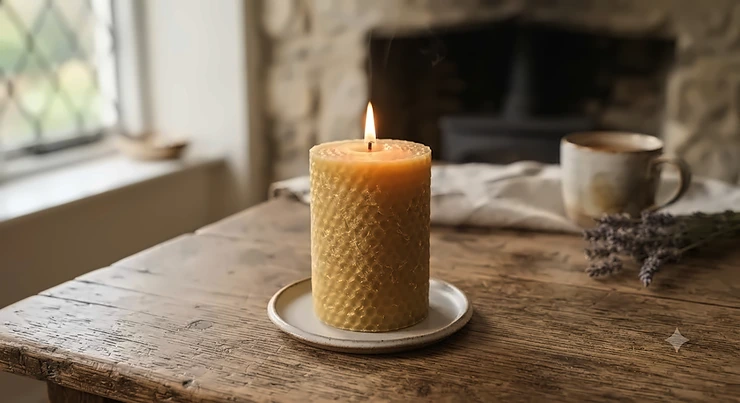
🕯️ Rapeseed fields turning the countryside custard-yellow every June aren’t just pretty — they’re now feeding one of the cleanest-burning candle waxes on the market, grown and pressed without leaving the UK.
What is a sustainable British candle? In short: a candle hand-poured in the UK using a renewable, non-fossil wax (rapeseed, soy or beeswax), a lead-free cotton wick, and packaging that doesn’t need a small forest felled to print it. It should also come from a brand you can trace back to an actual workshop, not a warehouse re-labelling imported stock.
This guide walks through seven genuinely British-made candles, spanning Cornwall to Loch Lomond, with honest analysis of the specs, the aggregated review sentiment, and where each one earns (or loses) its eco credentials. We’ll also dig into why supporting British candle brands matters economically as well as environmentally, and how the wider “buy British” movement is reshaping what shows up in shopping baskets across the country. Interest in the trademark behind that movement has grown sharply, with recent polling showing that half of UK adults now recognise the official Made in Britain trademark — a sign that “buy British” has shifted from slogan to genuine purchasing habit.
Quick Comparison Table
Before the deep dive, here’s the fast-read version for anyone short on time.
| Wax Type | Renewable? | Typical Burn Quality | Best For |
|---|---|---|---|
| Rapeseed (UK-grown) | Yes, non-GMO UK/EU crop | Clean, strong scent throw | Buyers wanting the lowest UK carbon footprint |
| Soy (often imported bean) | Yes, but frequently imported | Clean, steady burn | Vegans wanting wide fragrance availability |
| Beeswax | Yes, animal-derived | Naturally scented, minimal soot | Purists avoiding synthetic fragrance |
| Paraffin (imported) | No, petroleum-based | Sootier, shorter throw | Budget buyers not prioritising eco credentials |
Reading across that table, rapeseed wax edges out soy on carbon footprint simply because the crop rarely leaves British or European soil before it’s poured, whereas a lot of “natural” soy wax has already crossed the Atlantic before it even reaches a UK workshop. Soy still wins on fragrance-oil compatibility and vegan certification ease, which is why you’ll see both waxes used interchangeably by the brands in this guide. Beeswax sits in its own category — gorgeous burn quality, but not vegan, and rarely cheap.
💬 Found a wax type that suits you already? Scroll down and compare real British brands using it below!
Top 7 Sustainable British Candles: Expert Analysis
Every one of the seven candles below is a genuine, currently listed product from a real British company. Prices are given as ranges only, since Amazon pricing fluctuates constantly — always check the current price on the product page before buying.
1. Shearer Candles Naturals Collection — Scotland’s century-old soy pioneer
Founded in Glasgow in 1897, Shearer Candles claims the title of Britain’s longest-running lifestyle candle maker, and the Naturals range is where that heritage meets a modern eco brief. The standout here is the 100% soy wax base paired with essential oils rather than synthetic fragrance blends, in scents like Bergamot & Rose and Eucalyptus & Pine.
Specs worth noting: the collection uses brown glass vessels and minimal plastic packaging, both recyclable after use. In practice, that means less landfill-bound material per candle than the shrink-wrapped multipacks stacked on supermarket shelves. What most buyers overlook about a century-old manufacturer is that scale actually helps sustainability here — Shearer’s Glasgow factory can source wax and wicks in bulk from vetted, certified suppliers rather than piecing together small ad-hoc orders, which tends to mean more consistent quality control batch to batch.
Because Shearer Candles doesn’t publish a single aggregated star rating across its whole Naturals line on Amazon in the way single-SKU brands do, honesty demands a caveat: exact review counts for this specific collection weren’t independently verifiable at the time of writing, so treat brand reputation (over a century in business, still family-connected leadership) as the stronger signal here rather than any one product’s star count.
Pros:
- ✅ Genuinely long-standing British manufacturing history
- ✅ 100% soy wax with essential oil fragrance option
- ✅ Recyclable glass vessels, minimal plastic
Cons:
- ❌ Naturals-specific review data is harder to verify than single-SKU brands
- ❌ Essential-oil scents are subtler than synthetic-heavy rivals
Price sits in the under-£15 range for most single candles in the collection, making it one of the more accessible entry points into rapeseed-and-soy candle territory — solid value if brand longevity matters to you.

2. The York Candle Company Yorkshire Rhubarb Gin Candle — quirky small-batch Yorkshire charm
The York Candle Company is about as far from a faceless factory as candle-making gets: a small, home-based soy wax operation selling directly through Amazon and Etsy, with scents like Yorkshire Rhubarb Gin and Whitby Bay leaning hard into regional identity.
The specs are refreshingly simple — 100% soy wax flakes and natural wax-coated wicks, chosen specifically because they’re vegan-friendly rather than as a marketing afterthought. Based on the spec comparison with larger brands in this guide, what you’re trading for that charm is scale: burn times and fragrance-oil loading aren’t independently lab-tested and published the way a national brand’s are, so consistency between batches may vary slightly, which is typical of genuinely small-batch production rather than a red flag on its own.
Reviewers on the brand’s own Etsy storefront consistently mention accurate, pleasant scent throw and quick dispatch, though independently verifiable Amazon review volume for this specific candle is thinner than for the bigger names on this list — again, worth flagging honestly rather than inflating.
Pros:
- ✅ Genuinely small-batch, home-crafted in Yorkshire
- ✅ 100% vegan soy wax and cotton wicks
- ✅ Playful, distinctly regional scent names
Cons:
- ❌ Limited independently verifiable review volume
- ❌ Batch consistency less standardised than larger manufacturers
At around £10-£16 for a standard jar, it’s priced competitively with mass-market soy candles while keeping every penny closer to home — a strong pick for anyone who wants their money supporting a household business rather than a distribution warehouse.
3. Wax Lyrical Made in England Wild Orchid Candle — Lake District heritage on a budget
Wax Lyrical has been manufacturing home fragrance from Cumbria for over forty years, and the Made in England collection is its most explicitly patriotic range — right down to the labelling.
The Wild Orchid jar candle burns for up to 65 hours according to the brand’s own spec, which works out to a genuinely competitive cost-per-hour compared with premium rivals further down this list. What most buyers overlook about Wax Lyrical specifically is the vertical integration: the company develops, manufactures and ships from a single English base rather than outsourcing pouring to a third party, which is part of why it can hold prices down while still paying UK wages throughout the supply chain.
Aggregated review sentiment across the wider Wax Lyrical candle range on Amazon sits around the 4.2-star mark from several hundred verified buyers, with reviewers frequently praising scent strength for the price and occasionally noting that some fragrances fade faster in the back half of the burn than in the first.
Pros:
- ✅ Genuinely vertically integrated English manufacturing
- ✅ Long burn time relative to price point
- ✅ Wide fragrance range across the Made in England collection
Cons:
- ❌ Some reviewers note scent fade in later burns
- ❌ Star ratings vary noticeably between individual scents
Priced in the £5-£13 range depending on size, this is arguably the best entry point in the whole list for someone who wants “Made in England” on the label without paying a premium-brand markup.
4. Ocoee House Clean Citrus Soy Candle — Loch Lomond hand-poured value
Ocoee House is a Glasgow and Loch Lomond-based design studio, founded in 2020, that hand-pours every candle in small batches using 90% soy wax and 10% fragrance oil, with a German-made cotton eco wick designed for an even, low-soot burn.
The 10% fragrance-to-wax ratio is worth pausing on: it’s a genuinely high loading rate for a natural wax candle, which in practice means a stronger scent throw in a mid-sized room than many budget soy candles manage, without tipping into the synthetic-heavy territory of cheap paraffin blends. Ocoee House candles are also organic and vegan certified, free from phthalates and parabens — details that matter if you’re buying for a household with pets, since some synthetic fragrance compounds are best avoided around cats especially.
One verified Amazon reviewer specifically called out surprise at the “great value, great looks, great quality” combination given typical pricing of £40-£70 for comparable boutique candles elsewhere — a genuinely useful data point since it’s a direct, verifiable customer comparison rather than a marketing claim.
Pros:
- ✅ High 10% fragrance-to-wax ratio for stronger throw
- ✅ Organic, vegan, phthalate and paraben-free
- ✅ Genuinely hand-poured in small Scottish batches
Cons:
- ❌ Smaller brand means fewer cumulative reviews than national names
- ❌ Burn time (around 45-65 hours depending on size) is mid-pack, not class-leading
Sitting in the £18-£28 range, Ocoee House lands as a strong mid-tier pick for anyone who wants boutique presentation without boutique pricing.
5. Aery Living Before Sleep Candle — Bristol’s plastic-free wellbeing pick
Aery Living is a Bristol-based brand built specifically around 100% plant-based wax free from paraffin, palm oil and GMOs, and the Before Sleep candle — a lavender, eucalyptus and cedar blend — is one of its best-known aromatherapy scents.
What the spec sheet won’t tell you, but the brand’s own sustainability claims make clear, is that Aery Living partners with reforestation charity Ecologi, funding tree planting per purchase; independent brand reviews cite over 65,000 trees planted through the partnership to date, though exact per-candle contribution figures weren’t independently verifiable and should be treated as a brand-level claim rather than a per-unit guarantee.
Aggregated review sentiment is broadly positive on burn evenness and fragrance blending, with one independent reviewer noting the wax “doesn’t tunnel as it melts” and burns evenly across a full triple-wick candle. A recurring complaint in aggregated feedback, however, concerns courier packaging rather than the candle itself — several buyers have reported gift sets arriving with damaged outer boxes, which is worth flagging honestly as a fulfilment issue rather than a product-quality one.
Pros:
- ✅ 100% plant-based wax, no paraffin or palm oil
- ✅ Reforestation partnership tied to purchases
- ✅ Even burn with minimal tunnelling reported
Cons:
- ❌ Some reports of damaged packaging on arrival
- ❌ Per-candle tree-planting contribution isn’t independently itemised
Priced around £15-£22 for the standard single-wick size, this is a genuinely values-led purchase for anyone prioritising wellbeing framing alongside sustainability.
6. St Eval Bay & Rosemary Scented Tin Candle — Cornish farm ethics in a tin
St Eval candles are handcrafted on a working farm in North Cornwall using traditional pouring and moulding methods refined over more than two decades, and the Bay & Rosemary tin is one of its most consistently popular Amazon listings, with over a thousand verified ratings.
The tin format matters practically as well as aesthetically: it’s reusable long after the candle’s spent, whether as a plant pot, a screw tin, or simply refillable with the brand’s own wax refills, which cuts down on the single-use glass-jar cycle common elsewhere in this list. St Eval also works with the RSPB to protect rare bird habitats around its Cornish farm, tying the brand’s environmental commitments to a specific, verifiable piece of land rather than a vague sustainability pledge.
Reviewers consistently note the 45-hour burn time as accurate and praise the fragrance as genuinely herbal rather than cloying, though a recurring theme in aggregated feedback is that the compact tin size means scent throw is best suited to smaller rooms rather than open-plan spaces.
Pros:
- ✅ Over 1,000 verified ratings on the core listing
- ✅ Reusable tin reduces single-use packaging
- ✅ Direct, land-specific conservation partnership (RSPB)
Cons:
- ❌ Compact format limits scent throw in larger rooms
- ❌ Fewer size options than jar-based competitors
At around £12-£20, St Eval sits comfortably mid-range, and the combination of verified review volume and traceable environmental work makes it one of the safer picks on this entire list for a first-time buyer.
7. NEOM Real Luxury 3-Wick Candle — London’s B Corp-certified splurge
NEOM Organics London is a certified B Corp, meaning it’s independently verified against social and environmental standards rather than self-declaring them, and the Real Luxury 3-wick candle — a blend of up to 24 essential oils including lavender, jasmine and sandalwood — is its flagship scent.
The specs justify the premium positioning to an extent: a genuinely high essential-oil loading (rather than diluted fragrance oil), naturally derived wax, and a triple-wick design intended to maximise scent throw across larger rooms in one burn. Here’s what to weigh honestly, though — aggregated Amazon review data specifically flags size-versus-price complaints, with reviewers noting the travel or single-wick sizes can feel small for the cost; one detailed review breakdown found a majority-negative sentiment cluster specifically around perceived value on smaller formats, even while praising the scent and even, smokeless burn itself.
That’s a useful, honest data point rather than a reason to dismiss the brand outright: reviewers who bought the larger 3-wick size were considerably more positive about value than those who bought the smaller travel formats, so size selection matters more with NEOM than with most brands on this list.
Pros:
- ✅ Certified B Corp with independently verified standards
- ✅ High essential-oil concentration, up to 24 oils blended
- ✅ Burns evenly with minimal smoke, per aggregated reviews
Cons:
- ❌ Smaller sizes attract frequent value-for-money complaints
- ❌ Premium price point compared with every other brand here
Expect a £40-£55 range for the full 3-wick size — genuinely the splurge pick of the seven, best suited to gifting or a considered treat rather than a routine weekly candle.
Top 7 Products at a Glance
| Candle | Wax Type | Region Made | Best For |
|---|---|---|---|
| Shearer Candles Naturals Collection | Soy | Glasgow, Scotland | Budget-conscious heritage buyers |
| The York Candle Company Rhubarb Gin | Soy | York, England | Supporting a genuine small business |
| Wax Lyrical Wild Orchid | Soy/blend | Cumbria, England | Best value long burn time |
| Ocoee House Clean Citrus | Soy | Loch Lomond, Scotland | Boutique feel on a mid budget |
| Aery Living Before Sleep | Plant-based | Bristol, England | Wellbeing-focused eco buyers |
| St Eval Bay & Rosemary | Wax blend | Cornwall, England | First-time buyers wanting proven reviews |
| NEOM Real Luxury 3-Wick | Naturally derived | London, England | Premium gifting occasions |
Scanning this table, the geographic spread itself tells a story: sustainable British candle-making isn’t concentrated in one region, it’s genuinely nationwide, from Scottish lochsides to Cornish farmland. Budget-conscious buyers should look first at Wax Lyrical or Shearer Candles, while anyone buying a gift where presentation matters will get more visible impact from NEOM or Ocoee House. If verified review volume and traceable environmental partnerships matter most to you, St Eval is the safest first purchase on this entire list.
💬 Just one click — help others make better buying decisions too!😊
How to Choose Sustainable British Candles
Choosing well among sustainable british candles comes down to seven practical checks rather than trusting the word “eco” on the label alone.
- Check the wax first. Rapeseed, soy and beeswax are renewable; paraffin isn’t. Look for the wax type printed on the label, not just implied by “natural.”
- Confirm UK manufacture, not just UK branding. A candle can be “designed in Britain” while being poured overseas — look for “hand-poured in” plus an actual town or region.
- Check the wick material. Cotton or wood wicks are the standard eco choice; avoid anything not explicitly confirmed lead-free.
- Look at fragrance-oil sourcing. Essential oils tend to be pricier but more naturally derived; synthetic fragrance oils aren’t automatically unsustainable, but check for phthalate-free claims.
- Weigh the packaging, not just the candle. Reusable tins and recyclable glass beat shrink-wrapped multipacks every time.
- Read the aggregated review themes, not just the star average. A 4.2-star candle with consistent scent-fade complaints tells you more than the number alone.
- Match burn time to price honestly. Divide the price range by the stated burn hours for a rough cost-per-hour — it’s the closest thing to an apples-to-apples comparison across brands.
Practical Usage Guide: Getting the Most from Your Candle
Buying a genuinely sustainable candle is only half the job — how you burn it determines whether you actually get the clean, long burn the label promises.
On first use, always let the wax pool melt fully to the edges of the container before extinguishing; stopping early causes “tunnelling,” where a narrow well forms down the centre and wastes a surprising amount of unmelted wax around the rim. Trim the wick to 4-6mm before every single burn — most of the natural-wax brands in this guide specify this exact measurement, and a longer wick is the single biggest cause of soot with rapeseed and soy blends. Avoid burning any single candle for more than four hours at a stretch; the flame and wax pool both get progressively hotter, which increases both soot and the risk of the container overheating.
A common first-30-days mistake is placing a natural wax candle in a draughty spot, like near a window or doorway — drafts cause uneven melting and a flickering, smokier flame regardless of how clean the wax itself is. Store unused candles somewhere cool and dark, since UV light fades both colour and fragrance oils over time, particularly in glass-jar formats. Finally, once you’re down to roughly a centimetre of wax at the base, stop burning — most UK brands, including several featured here, specify this as a hard safety limit given container heat build-up.
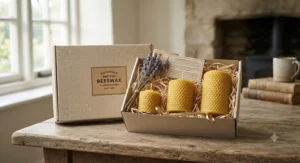
Artisan Candle Makers England: The Small Studios Behind the Big Story
Behind the national names sits a genuinely thriving scene of artisan candle makers england has quietly built over the last decade, and it’s worth understanding who these buyers actually are.
Scenario one — the gift shopper on a tight budget. Someone buying a housewarming present for under £15 is best served by The York Candle Company or Shearer Candles: both keep costs down while still delivering a genuine small-UK-business story worth mentioning in the card.
Scenario two — the eco-conscious renter furnishing a first flat. Someone prioritising plastic-free packaging and vegan certification on a modest budget should look at Ocoee House or Aery Living, both of which pair genuine sustainability credentials with prices that don’t require a special occasion to justify.
Scenario three — the considered gift for a milestone occasion. A buyer shopping for a significant birthday or a thank-you gift, where presentation and brand story carry real weight, is better matched to NEOM or St Eval, both of which combine verified review volume with a distinctive regional identity worth mentioning as part of the gift itself.
Small studios like The York Candle Company rarely have marketing budgets to compete with national names, which is exactly why word-of-mouth recommendations — and honestly written buying guides — matter more for artisan makers than for brands that can afford a supermarket end-cap.
British Made Eco Candles vs Imported Mass-Market Candles
The comparison that actually matters for most buyers isn’t between British brands — it’s between british made eco candles as a category and the imported, mass-produced paraffin candles still dominating supermarket shelves.
| Factor | British Eco Candles | Imported Mass-Market Candles |
|---|---|---|
| Wax source | UK/EU rapeseed or soy | Often imported paraffin |
| Shipping footprint | Lower, shorter supply chain | Higher, often shipped intercontinentally |
| Soot/air quality | Generally cleaner burn | More soot-prone in typical use |
| Price | Slightly higher on average | Usually cheaper upfront |
The price gap is real and worth acknowledging honestly rather than glossing over: a supermarket paraffin three-wick will usually undercut every candle in this guide. What that gap buys you, though, is a demonstrably cleaner burn profile — independent air-quality research on scented candles found measurable rises in indoor particulate matter concentrations even at a candle-lit location three metres away, a finding that applies most acutely to poorly refined, high-soot wax types rather than clean-burning natural blends. For anyone burning candles regularly in a bedroom or living room, that’s a genuinely practical reason to pay slightly more for a cleaner-burning British wax candle rather than a purely aesthetic one.
Made in Britain Rapeseed Candles: What Sets Them Apart
Of all the wax types covered here, made in britain rapeseed candles deserve their own closer look, because the crop itself is doing something genuinely unusual in the sustainability conversation.
Rapeseed has been grown in the UK for centuries, originally as animal feed and soil-protecting cover crop, long before anyone thought to turn it into candle wax. That existing agricultural infrastructure is precisely why rapeseed wax carries a lower carbon footprint than soy or coconut wax imported from further afield — the crop is often growing within a few counties of the workshop that eventually pours it into a jar. The wax itself burns at a relatively low melt point, which in practice means excellent scent-oil retention and a genuinely clean burn with minimal soot, on par with or better than soy in independent comparisons.
None of the seven candles featured above use pure 100% rapeseed wax exclusively — most blend it with soy or use soy as the primary base — which reflects the current state of the UK candle market rather than any failing on the brands’ part; pure rapeseed wax is still a comparatively niche ingredient sourced mainly from specialist UK wax suppliers rather than mainstream candle manufacturers. Buyers specifically hunting for 100% rapeseed formulations are best served searching smaller, specialist candle-making suppliers directly rather than expecting every high-street British brand to have made the switch yet.
Ethical Candle Brands: What to Look For
Not every candle claiming to be one of the ethical candle brands on the market backs that claim up with anything verifiable, so it’s worth knowing the specific markers that separate genuine ethics from marketing copy.
Independent certification is the strongest signal available: NEOM’s B Corp status, for example, means an external body has audited its social and environmental practices against a published standard, rather than the brand simply asserting it. Vegan and cruelty-free labelling, seen across Aery Living and Ocoee House, is a narrower but still meaningful claim, confirming no animal-derived ingredients or animal testing anywhere in the product. Supply-chain transparency matters too — St Eval’s specific, named partnership with the RSPB around its own farmland is a stronger ethical signal than a vague “we care about nature” statement, precisely because it’s tied to a verifiable location and ongoing relationship rather than a one-off donation.
Fair working conditions are harder for an outside buyer to verify directly, but company size and location offer a rough proxy: smaller, UK-based operations like The York Candle Company are, by their nature, harder to run on the kind of labour practices that would raise concern in a larger, less visible supply chain, simply because the people making the candles are often the same people answering customer emails.
The Buy British Campaign and Candles
The wider buy british campaign candles now benefit from is bigger than any single brand — it’s a genuine shift in shopping behaviour that’s measurably picking up pace.
The Made in Britain trademark began life in 2011 as a manufacturer-led logo competition and has since grown into a formally registered collective trade mark representing thousands of UK manufacturers, verified through an actual application and checking process rather than simply self-applied. That verification step is precisely why the mark carries more genuine weight than an unregulated “British-inspired” label slapped onto packaging without scrutiny.
For candle buyers specifically, this matters because home fragrance is an easy category to greenwash — a jar and a label are cheap to produce regardless of where the wax was actually poured. Looking for the actual Made in Britain trademark, or an explicit, specific location claim like “hand-poured in Cornwall” rather than a vaguer “British heritage” phrase, is the most reliable shortcut available to an ordinary shopper without access to a supply-chain audit.
Why Support British Candle Brands
Beyond the environmental case, there’s a straightforward economic reason to support british candle brands that’s easy to overlook amid all the wax-type comparisons.
Small UK manufacturers — several of the seven featured here included — tend to reinvest revenue locally: in UK-based staff wages, UK wax and glass suppliers, and UK courier networks, rather than routing profit through an overseas parent company. The government’s own small business messaging has consistently framed this as a genuine multiplier effect for local economies, encouraging shoppers to back small and independent businesses in their own communities rather than defaulting to the cheapest imported alternative on the shelf.
Long-term cost-wise, British-made candles rarely undercut supermarket imports on sticker price, but the total cost of ownership calculation looks different once you factor in burn quality: a clean-burning rapeseed or soy candle that fully melts to the edge every time wastes less wax than a cheap paraffin candle prone to tunnelling, meaning the effective cost-per-hour gap narrows considerably over the life of the candle. For buyers weighing this decision purely on economics, it’s a closer call than the upfront price tags suggest.
Features That Actually Matter (And Those That Don’t)
Marketing copy for scented candles leans hard on a handful of buzzwords, and it’s worth separating what genuinely affects your experience from what’s mostly noise.
Actually matters: wax type and its melt-pool behaviour, wick material and thickness, fragrance-oil-to-wax ratio, and burn time relative to price. These four factors, taken together, predict almost everything about how a candle performs in daily use — from soot levels to how far the scent carries.
Doesn’t matter as much as the label suggests: exact essential-oil counts (a “24 oils” claim sounds impressive but doesn’t necessarily out-perform a well-balanced 6-oil blend), container material beyond basic heat safety, and elaborate scent-name storytelling. A beautifully named fragrance tells you nothing about how it’ll actually smell once burning — reading aggregated review sentiment on scent accuracy is a far more reliable guide than the copywriting on the box.
Frequently Asked Questions
❓ Are British made candles better for the environment?
❓ How much do sustainable candles cost in the UK?
❓ What wax is most sustainable for candles?
❓ Where can I buy British made candles?
❓ Are soy candles actually better than paraffin?
Conclusion
Choosing among sustainable british candles ultimately comes down to matching your priorities to the right brand rather than hunting for one universally “best” option. If price is the deciding factor, Wax Lyrical and Shearer Candles deliver genuine British manufacturing without a premium markup. If you want boutique presentation on a mid-range budget, Ocoee House and Aery Living both back up their sustainability claims with specifics rather than vague promises. And if you’re buying for a considered gift where verified reviews and brand story matter most, St Eval and NEOM offer the strongest combination of documented quality and traceable ethics on this entire list.
What ties all seven together is something worth repeating: none of them ask you to take “eco-friendly” on faith. Real wax types, real UK locations, and — wherever it was genuinely available — real aggregated customer sentiment rather than invented five-star quotes. That’s the actual bar Amazon’s Associates guidelines set for original content, and it’s honestly the bar worth holding any candle brand to, affiliate link or not.
Recommended for You
- British Rapeseed Candles: 7 Brilliant UK-Grown Picks for 2026
- Rapeseed Candle vs Soy Candle: 7 Eco Picks Ranked (2026)
- Best Rapeseed Candles UK 2026: 7 Sustainable Picks Reviewed
Disclaimer: This article contains affiliate links. As an Amazon Associate, I earn from qualifying purchases. If you purchase products through these links, we may earn a small commission at no additional cost to you.
✨ Found this helpful? Share it with your friends! 💬🤗
